EN
EN

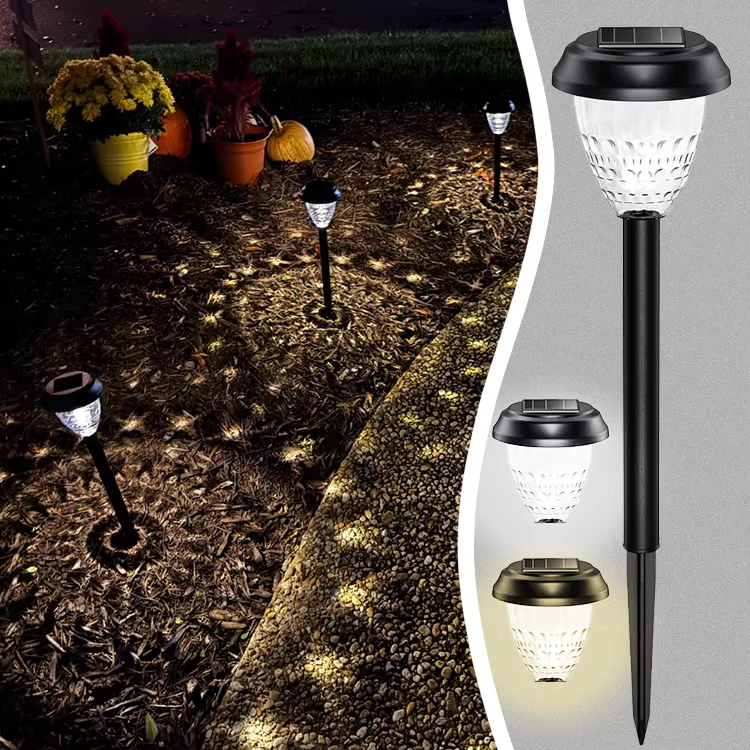
CE Marking: Essential Certification for Solar Pillar Lamp in the European Union
Understanding CE-LVD, CE-EMC, and RoHS Requirements for Solar Pillar Lamp
Solar pillar lamps entering EU markets must comply with three core CE directives:
- CE-LVD (Low Voltage Directive): Ensures electrical safety for components operating below 75V DC
- CE-EMC (Electromagnetic Compatibility): Validates resistance to interference from devices like 5G routers or industrial equipment
- RoHS: Restricts lead, mercury, and four other hazardous substances in electronic components
A 2023 Ponemon Institute study found 28% of solar lighting products fail initial CE-EMC testing due to poorly shielded LED drivers. To demonstrate compliance, manufacturers must provide circuit diagrams showing surge protection, material declarations supported by ICP-MS test reports for RoHS, and EMI/EMS results from EU-notified laboratories.
Common Compliance Challenges for Exporters Entering Germany and EU Markets
Germany's ZLS market surveillance authority rejects 19% of imported solar pillar lamps, primarily due to:
| Issue Frequency | Compliance Failure |
|---|---|
| 42% | Incomplete technical documentation |
| 33% | Substandard IP65 waterproofing tests |
| 25% | Lithium battery cells lacking UN38.3 certification |
Many exporters overlook EN 60529 dust-ingress requirements for solar controller compartments, which contributes to premature failures in harsh environments such as Scandinavian winters.
Strategies to Achieve Full CE Compliance and Pass Market Surveillance
Pre-test all components using harmonized standards like EN 61347-1 for LED drivers before final assembly. Implement a 3-stage compliance workflow:
- Design Phase: Use simulation software to predict EMC issues in PCB layouts
- Pre-Certification: Conduct sample testing at accredited labs such as TÜV SÜD or Intertek
- Post-Certification: Maintain batch-level traceability through digital systems
According to Bureau Veritas, solar pillar lamps with dual-layer conformal coating reduce field failure rates by 67% during mandatory EMC retesting, significantly improving long-term reliability.
UL and FCC Certification: Meeting Safety and Electromagnetic Standards in North America
Key Differences Between UL 1598, UL 8750, and CSA C22.2 for Solar Pillar Lamp
When it comes to getting solar pillar lamps certified, manufacturers need to know the difference between UL 1598 which covers luminaire safety, UL 8750 that deals specifically with LED systems, and CSA C22.2 from Canada's electrical code requirements. UL 1598 looks at things like how sturdy the lamp is built and whether it can handle different weather conditions. Meanwhile, UL 8750 is all about making sure those LED drivers are safe to use and won't overheat during operation. The CSA standard number 250.0 under C22.2 actually shares most of the same requirements as UL 1598, around 85% overlap according to industry experts, but adds extra rules about wiring practices and grounding specifications that are specific to Canadian installations. Understanding these distinctions matters a lot for compliance across North American markets.
| Standard | Scope | Key Testing Areas | Market Focus |
|---|---|---|---|
| UL 1598 | Luminaire safety | Enclosure integrity, moisture resistance | U.S. commercial installations |
| UL 8750 | LED components | Driver reliability, thermal cutoff | All LED-powered systems |
| CSA C22.2 | Electrical safety compliance | Conductor sizing, bonding practices | Canadian market entry |
A 2023 solar lighting safety study revealed that 62% of non-compliant products failed due to incorrect application of these overlapping standards.
FCC Part 15 Subpart B: Ensuring EMC Compliance for Wireless-Controlled Solar Lights
For solar pillar lamps equipped with wireless controls, compliance with FCC regulations is essential. Specifically, they need to stay under the 500 microvolt per meter limit at three meters distance across frequencies from 30 to 1000 MHz as outlined in Part 15 Subpart B. This helps avoid disrupting nearby communication systems. The problem comes when manufacturers integrate these controllers into their designs. These components tend to generate unwanted electromagnetic noise. A recent 2023 report on EMC compliance shows just how common this issue has become - nearly half (about 41%) of all tested solar lighting units needed some sort of shielding modification before passing certification. That's quite a challenge for companies trying to get their products to market while maintaining both functionality and regulatory standards.
Pathway to UL/CSA Dual Certification and FCC Approval for U.S. and Canadian Markets
Pursue parallel testing through accredited labs to achieve UL and CSA certification simultaneously. The harmonized UL/CSA process reduces redundant evaluations by 30%, while FCC approval requires separate EMC validation. A 2024 market analysis showed combining certifications lowers total compliance costs by $18,000 per product variant compared to sequential submissions.
IEC Standards and CB Scheme: Enabling Global Market Access for Solar Pillar Lamp
Solar pillar lamp manufacturers gain a strategic advantage by aligning with IEC standards and the IECEE CB Scheme, which streamline safety assessments across 53 countries. These frameworks minimize redundant testing while ensuring adherence to international benchmarks for durability, photobiological safety, and performance.
Relevance of IEC 60598 and IEC 62471 in International Solar Lighting Safety
The IEC 60598 standard really pushes the envelope when it comes to testing outdoor lights. It demands they can withstand water exposure at IP65 level and still hold up under pretty serious wind forces, around 40 meters per second to be exact. Then there's IEC 62471 which focuses on eye safety issues, particularly controlling how much blue light gets emitted. They cap it at something like 100 watts per square meter steradian, which matters a lot for streetlights and other public area lighting setups. When we look at the bigger picture, these two standards together account for nearly all the product recalls related to safety problems in the solar lighting business worldwide according to some recent industry reports from 2023.
Leveraging the IECEE CB Scheme to Streamline CCC, PSE, and RCM Certifications
The CB Scheme enables mutual recognition of test data, allowing manufacturers to accelerate regional approvals:
- CCC (China): Reduces documentation effort by 80%
- PSE (Japan): Eliminates duplicate temperature cycling tests
- RCM (Australia): Accepts CB-reported EMC results without re-evaluation
This interoperability helps avoid over $15,000 in duplicated testing expenses per target market.
Maximizing ROI on Testing: How One CB Report Can Unlock 10+ Global Markets
A typical $18,000 CB Scheme report satisfies about 70% of technical requirements across the EU, ASEAN, and Gulf Cooperation Council nations. When used strategically, it supports concurrent pursuit of multiple certifications:
| Certification | Region | Time Saved | Cost Avoidance |
|---|---|---|---|
| KC | South Korea | 8 weeks | $7,200 |
| BIS | India | 10 weeks | $9,100 |
| SIRIM | Malaysia | 6 weeks | $5,400 |
Centralized compliance strategies reduce per-market certification costs by an average of 58% compared to fragmented approaches.
Regional Certifications: Navigating PSE, RCM, BIS, and MEPS for Key Markets
PSE Certification Under Japan's DENAN Act for Solar Pillar Lamp
Solar pillar lamps sold in Japan require PSE certification under the DENAN Act, confirming compliance with the Electrical Appliance and Material Safety Law. This includes verification of electric shock protection, thermal stability, and material durability. Manufacturers must submit samples to accredited labs for safety and EMC testing, especially for models with lithium-ion batteries—requirements strengthened after 2021 updates to Japan's energy storage regulations.
RCM and MEPS Compliance in Australia and New Zealand: Efficiency and Safety Rules
In Australia and New Zealand, solar pillar lamps must meet dual requirements:
- RCM mark: Integrates EMC and electrical safety conformity
- MEPS (Minimum Energy Performance Standards): Sets minimum efficiency thresholds for off-grid solar lighting (effective since 2022)
A 2023 analysis found that 23% of shipments failed MEPS due to photovoltaic conversion rates below 18%, underscoring the need for optimized solar harvesting design.
BIS Certification in India: Meeting IS 14465 and National Energy Efficiency Norms
India mandates BIS certification under IS 14465 for structural integrity and ingress protection, along with energy efficiency benchmarks under the Star Rating Program. Testing must be conducted at NABL-accredited facilities within India. Recent reforms in 2024 allow parallel evaluation of vibration resistance (≥5G) and photovoltaic performance (minimum 4-hour runtime at 50-lumen output), accelerating time-to-market.
Middle Eastern and African Compliance: SASO/SABER and PVOC for Solar Pillar Lamp Exports
SASO/SABER Product Registration for Market Entry in Saudi Arabia
For companies looking to sell products in Saudi Arabia, getting SASO or SABER certified is pretty much a requirement these days. These certifications basically confirm that products meet the country's safety rules and electromagnetic compatibility standards. What happens next? Products need to go through independent testing labs to check their solar panel efficiency rates, which should hit at least 18% even when exposed to harsh desert sunlight. They also have to pass IP65 tests proving they can withstand tough weather conditions. According to some research from last year, around one third of all shipments got stuck in customs because the technical papers weren't properly translated into Arabic. That highlights why getting those manual translations right matters so much for smooth operations across borders.
PVOC Requirements in Kenya, Tanzania, and Uganda: Pre-Shipment Verification Process
The East African market has put in place something called PVOC, which stands for Pre-Shipment Verification of Conformity. This process checks if solar pillar lamps actually live up to what's required locally when it comes to how long their batteries last at least 2000 charge cycles and whether the charge controllers work reliably enough. Companies like Intertek and SGS handle most of these inspections according to guidelines set by different national bodies including KEBS in Kenya, TBS in Tanzania, and UNBS in Uganda. Getting this paperwork done costs anywhere between $1200 and $2500 per shipment, depending on various factors. Now things got even trickier since Kenya recently changed its tariffs. Non-compliant solar products face an extra 25% duty surcharge, so many exporters find themselves rushing to get those lab tests completed before shipping anything out just to keep costs under control.
Balancing High Certification Costs with Low-Margin Realities in African Markets
SASO/SABER requirements along with PVOC certification typically push production costs up somewhere between 18% and 22%, which hits exporters pretty hard in their pockets. But there's a way around this burden through batch testing where companies can get multiple product variants certified at once instead of separately. Take COMESA's Regional Solar Initiative for example - businesses participating in this program see their per unit certification fees drop anywhere from 40% all the way down to 60%, especially helpful for small and medium enterprises struggling with tight budgets. A recent report from the African Renewable Energy Consortium back in 2024 showed something interesting too: when exporters adopt these collaborative approaches to compliance, they actually recoup their certification investments within just six to eight months even though their overall profit margins stay below 15%. Makes sense really, since spreading out those compliance costs across multiple products helps balance things out financially.
FAQ
What is the CE marking and why is it essential for solar pillar lamps in the EU?
CE marking is mandatory certification for products in the EU, ensuring they meet health, safety, and environmental requirements.
How do CE-LVD, CE-EMC, and RoHS directives impact solar pillar lamp exporters?
These directives ensure electrical safety, resistance to electromagnetic interference, and restrict hazardous substances.
Why is UL certification important for North American markets?
UL certification tests solar pillar lamps for safety and reliability, critical for consumer trust and regulatory compliance in North America.
How can manufacturers streamline global market access using the IECEE CB Scheme?
The CB Scheme allows mutual recognition of test results, minimizing redundant testing and facilitating entry into multiple markets.
What are the financial benefits of batch testing under programs like COMESA?
Batch testing across multiple product variants reduces certification costs and expedites market entry.
Table of Contents
- CE Marking: Essential Certification for Solar Pillar Lamp in the European Union
- UL and FCC Certification: Meeting Safety and Electromagnetic Standards in North America
- IEC Standards and CB Scheme: Enabling Global Market Access for Solar Pillar Lamp
- Regional Certifications: Navigating PSE, RCM, BIS, and MEPS for Key Markets
- Middle Eastern and African Compliance: SASO/SABER and PVOC for Solar Pillar Lamp Exports