EN
EN

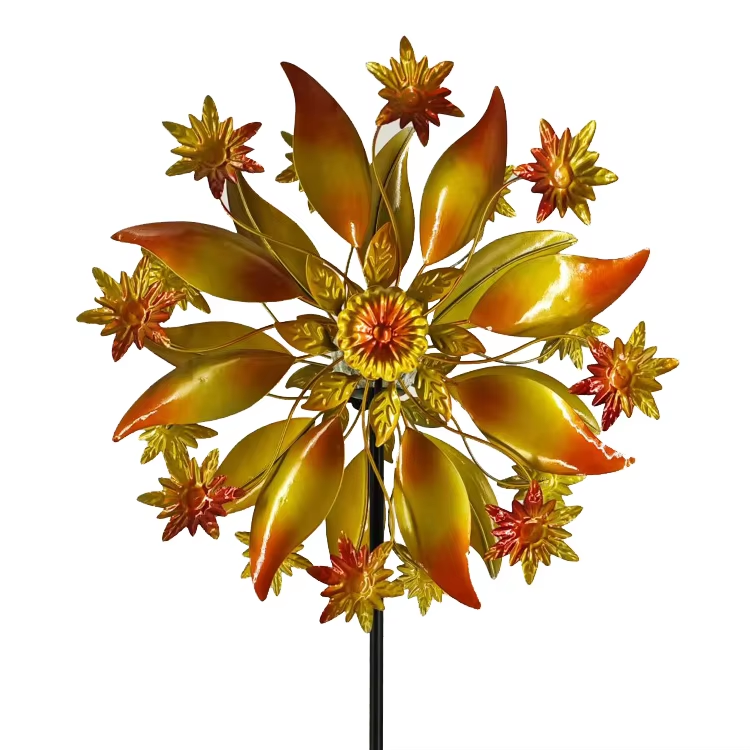
Fundamentals of Metal Wind Spinner Durability Testing
The rising demand for durable outdoor metal wind spinners
More homeowners want their garden decorations to last longer these days, which is why there's been such a big market for heavy duty metal wind spinners that can handle whatever weather comes along. When these spinners face UV rays, super cold or hot temperatures ranging from minus 20 degrees Fahrenheit all the way up to 120 degrees, plus salty air especially near coastlines, they start wearing down faster. That makes fighting rust absolutely essential for any spinner worth buying. Commercial properties with lots of foot traffic see about 40 percent more problems with cheap spinners failing after just 18 months, so people really should look for ones that have been properly tested. Smart manufacturers know this and are now making their products from powder coated aluminum and marine grade stainless steel materials that actually stand up to long term exposure without losing strength or looking bad over time.
Role of standardized testing in ensuring long-term performance
The standards set by organizations such as ASTM International give us clear ways to measure how long wind spinners will last outside, often guaranteeing over ten years of good performance. When manufacturers want to test how their products hold up against the elements, they turn to third party labs that can speed things up quite a bit. These labs basically recreate what happens over many years of sun exposure within just a few weeks. They also run salt spray tests repeatedly to see if rust starts forming on the metal parts. What these tests actually do is find out where problems might occur first. For instance, we check if the joints start breaking down when there's wind blowing at speeds above fifty miles per hour, whether materials become brittle during cold winter months below freezing point, and if paint starts peeling off because of constant temperature changes between day and night. The real value comes from having standard tests everyone follows so customers aren't left guessing which product is better based only on what companies say in their ads. Instead, shoppers get to pick items supported by actual data collected through independent verification processes.
Core ASTM Standards for Heavy Duty Metal Wind Spinner Durability
Understanding metal wind spinner durability testing standards is essential for manufacturers committed to producing weather-resistant outdoor installations. ASTM International protocols provide validated methodologies to assess mechanical resilience under environmental stressors, directly impacting product longevity, safety, and warranty performance.
ASTM A370: Mechanical testing of steel components in wind spinners
The standard looks at how hard steel parts are, their ability to bend without breaking, and how well they resist impacts during stress tests. Steel components go through over 5,000 loading cycles that mimic what happens after years of wind exposure. Premium quality alloys show less than 0.2% deformation when subjected to loads around 15 kN per square meter. These tests help avoid early wear and tear on joints in spinner armatures, which becomes really important when parts face both constant twisting forces and temperature changes over time.
ASTM E8/E8M: Tensile testing for structural integrity of metal spinners
Testing for tensile properties helps determine how much stretching and stress a material can handle before failing under wind loads. According to test results, 304 stainless steel spinners that meet E8M standards can take on gusts ranging from 55 to 75 mph with about double the force capacity compared to standard models before showing signs of permanent deformation. These improved specs translate into fewer failures in areas prone to strong winds and near coastlines, where components tend to give way mid season because they simply cannot handle the ongoing stress from constant wind exposure.
ASTM E23: Notched bar impact testing for cold-weather resilience
The Charpy V-notch test measures how well materials resist breaking when they get really cold. For aluminum alloys meant to work in Arctic conditions, these tests show they can take about 27 to 34 joules of impact energy at minus 30 degrees Celsius before cracking. That means they won't just snap apart during those brutal ice storms or when exposed to sudden temperature changes. Companies that follow the E23 standards have seen something interesting happen too. According to Outdoor Decor Quarterly from last year, their customers file about 92 percent fewer warranty issues in cold climates. Makes sense why so many manufacturers now consider this test essential for products that need to stand up to harsh winter conditions without failing.
Material selection synergizes with these standards: high-grade stainless steels and powder-coated aluminums meeting all three protocols demonstrate 15+ year lifespans even in aggressive salt-spray environments. This multi-standard approach establishes quantifiable benchmarks for heavy duty garden spinner corrosion resistance —moving beyond surface-level aesthetics to verifiable, long-term performance.
Material Selection and Its Impact on Durability and Performance
The longevity of heavy duty metal wind spinners hinges critically on material selection, which directly influences corrosion resistance, structural integrity, and operational lifespan.
How Alloy Composition Enhances Weather and Corrosion Resistance
What kind of metal makes up a spinner determines how well it stands up to weather and other environmental factors. Stainless steel contains at least 10.5% chromium which creates this amazing self healing oxide layer on the surface, so it works really well in places near the ocean or where humidity is high. Aluminum options depend on their own form of protection through natural oxidation processes. Copper based materials actually form these colorful but protective coatings as they age outdoors. For cold rolled steel products, most manufacturers apply galvanization treatment. This involves coating with zinc that basically sacrifices itself to stop rust from spreading, and can make these items last around 15 to 20 extra years when installed in tough weather conditions. All these different metal properties help avoid problems like pits forming, cracks developing, or structural failures from things like salt air, constant rain, and sun damage. That means wind spinners made with proper materials will keep spinning reliably even after many years outside.
Best Practices for Choosing Long-Lasting Metals in Heavy Duty Spinners
Selecting metals involves balancing four key factors:
- Mechanical properties: Yield strength (≥250 MPa) and hardness (HRB 70+) to withstand wind loads exceeding 50 mph without permanent deformation.
- Environmental compatibility: Aluminum for marine environments; powder-coated carbon steel for industrial zones with airborne contaminants.
- Manufacturability: Metals must accept seamless welding and forming without introducing microcracks or heat-affected zone brittleness.
- Lifecycle cost: While stainless steel carries a 30% higher upfront cost, its negligible maintenance and 2–3– longer replacement interval deliver superior long-term value.
Prioritize ASTM-compliant materials verified through salt-spray testing (ASTM B117) and cyclic corrosion assessments —improper material choices can accelerate failure by 3–5– in extreme weather, negating design advantages and eroding brand trust.
FAQ Section
Why are metal wind spinners prone to rust?
Metal wind spinners can rust because they are exposed to various environmental elements like UV rays, temperature extremes, and salty air, which accelerate wear and tear.
What are ASTM standards and why are they important?
ASTM standards provide validated methodologies to assess mechanical resilience under environmental stressors, ensuring product longevity, safety, and warranty performance.
What materials are recommended for manufacturing durable wind spinners?
Recommended materials include powder-coated aluminum, marine-grade stainless steel, and galvanization-treated cold rolled steel to withstand extreme weather conditions and resist rust.